A Guide to Sewage Backup Cleanup in Lakewood's Older Neighborhoods
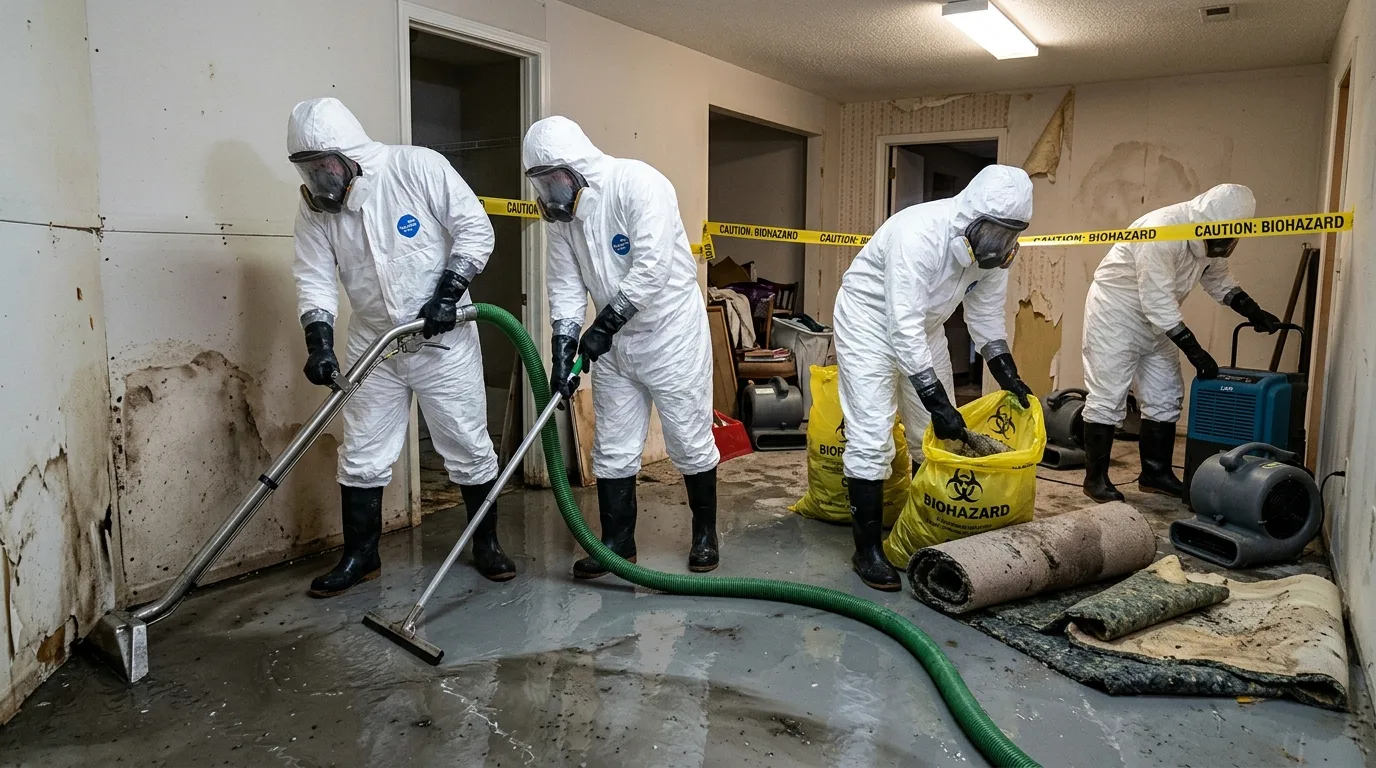
What does a sewage backup in your Lakewood home actually mean for your health, your home, and your wallet? The answer depends on how quickly you respond and who you call. Sewage is classified as Category 3 water — the highest contamination level in the IICRC restoration standard — meaning it contains bacteria, viruses, and parasites that pose direct health risks to anyone in contact with the water or the affected area. This guide explains why sewage backup is disproportionately common in Lakewood’s older neighborhoods, what professional Category 3 cleanup looks like, and the insurance implications most homeowners don’t discover until after the event.
Sewage Backup in Your Lakewood Home? Call Now — 24/7
(877) 698-1311 — OSHA-compliant Category 3 cleanup throughout Lakewood and Jefferson County.
Why Sewage Backup Is More Common in Lakewood’s Established Neighborhoods
The neighborhoods that give Lakewood much of its character — Eiber, Belmar, Kendrick Lake, and older sections of Applewood — were developed in the 1950s, 1960s, and early 1970s. The sewer laterals serving these homes are now 50–70 years old and built from clay pipe and cast iron — materials that degrade, crack, and become susceptible to tree root intrusion over this timespan. The mature trees lining these established streets are often the direct cause of sewer line failures: roots seeking water grow into pipe joints, gradually blocking flow and eventually causing backups into the lowest-level drains in the home.
Jefferson County’s clay soils add another failure mechanism: the same expansive clay that causes foundation pressure shifts the soil around buried sewer pipes, creating joint separations and pipe deformations that allow both tree root entry and soil infiltration. During heavy rainfall events — particularly summer thunderstorms that deliver an inch of rain in under an hour — municipal sewer system capacity can be exceeded, causing combined sewer overflow that pushes sewage back through floor drains and toilet connections into basements throughout Lakewood.
Sewage Backup Cleanup — Serving Lakewood's Older Neighborhoods
We understand the infrastructure challenges specific to Eiber, Belmar, and Kendrick Lake. Call (877) 698-1311.
What Makes Category 3 Sewage Cleanup Different from Regular Water Damage
The distinction between clean water and sewage cleanup is not a matter of degree — it’s a matter of protocol. Category 3 water requires:
Full personal protective equipment. Technicians wear Tyvek suits, N-95 respirators, and chemical-resistant gloves. No technician enters a sewage-affected area without full PPE. Any cleanup company that sends unprotected workers into a sewage-contaminated space is violating OSHA worker safety standards.
Mandatory material replacement. Unlike Category 1 or 2 events where porous materials can sometimes be dried and salvaged, Category 3 sewage contact requires removal and disposal of all porous materials — carpet, drywall, insulation, and wood subfloor — that came into contact with the contaminated water. These materials cannot be adequately decontaminated in place and present ongoing health risks if left.
OSHA-compliant waste disposal. Sewage-contaminated materials are categorized as regulated waste in Colorado and must be disposed of in sealed, labeled containers through approved waste management channels. Not through a standard construction dumpster.
Multi-stage decontamination. After material removal, all non-porous surfaces (concrete, tile, metal) receive cleaning, EPA-registered disinfectant application, and antimicrobial treatment. Air scrubbers with HEPA filtration run continuously to capture airborne particles throughout the process.
Post-remediation verification. Air quality and surface sampling confirm that contamination levels have returned to safe thresholds before occupants can return to the affected area.
How to Respond to a Sewage Backup in Lakewood
Do not enter the affected area without protection. Sewage water exposure — even brief skin contact — can cause bacterial infection. Do not attempt to clean or mop sewage without appropriate PPE.
Keep occupants, children, and pets away. The entire affected area should be treated as a no-entry zone until professional remediation is complete. Sewage-contaminated air carries pathogens that can affect respiratory health.
Call for professional cleanup immediately. Category 3 events are not “wait until morning” situations. The longer sewage sits in contact with structural materials, the more deeply it penetrates and the more material will require replacement. Call Lakewood Water Damage Pros at (877) 698-1311 for 24/7 response.
Document before any cleanup begins. Photograph the backup point, the standing sewage level, and all visible damage. Your insurance claim — if coverage applies — requires documentation of original conditions.
Call your insurer. Notify your insurance company as soon as practical. Standard homeowner’s policies typically do not cover sewage backup without a specific backup rider. However, if the event was caused by a covered peril (e.g., a storm that overwhelmed the municipal system), coverage may apply under different policy language.
Preventing Sewage Backup in Lakewood’s Older Neighborhoods
Annual sewer line camera inspection. For homes in Eiber, Belmar, and other neighborhoods with aging clay sewer laterals, an annual camera inspection by a licensed plumber identifies root intrusion, pipe deterioration, and joint separations before they cause a backup. This inspection costs $150–$400 and can prevent a $5,000–$15,000 cleanup event.
Backwater valve installation. A backwater valve (check valve) installed on the main sewer lateral prevents municipal system backflow from entering the home during capacity-overload events. Installation costs $500–$1,500 — a fraction of cleanup costs.
Root treatment. Annual foaming root treatment through floor drains inhibits root growth in the sewer lateral without requiring excavation.
Frequently Asked Questions
How much does sewage backup cleanup cost in Lakewood?
Sewage cleanup in Lakewood ranges from $2,000–$6,000 for the remediation phase depending on affected area and volume. Total costs including structural material replacement and reconstruction commonly reach $8,000–$15,000+ for significant events. Compared to Arvada and Englewood, Lakewood’s older housing stock — particularly in the Eiber and Kendrick Lake areas — tends toward the higher end of this range due to the extent of porous material that must be replaced.
Does insurance cover sewage backup in Lakewood homes?
Standard homeowner’s policies typically exclude sewage backup without a specific rider. If your policy includes a “water backup and sump overflow” endorsement, cleanup costs are generally covered up to the endorsement limit (commonly $5,000–$25,000). Review your policy immediately after an event. We document the full scope regardless of coverage to support your claim process.
Can I clean up sewage backup myself in Lakewood?
No. Category 3 sewage cleanup requires professional-grade PPE, OSHA-compliant disposal procedures, and EPA-registered disinfectants at appropriate concentrations. DIY cleanup without proper PPE and protocols creates health hazards and typically fails to achieve the decontamination standard required before the space is safe for occupancy. Call (877) 698-1311 immediately for professional response.
Sewage Backup? Don't Wait — Call for Professional Cleanup
Lakewood Water Damage Pros — OSHA-compliant Category 3 sewage cleanup throughout Lakewood and Jefferson County. Call (877) 698-1311.
Related: