IICRC Certified vs. Uncertified: Why It Matters for Lakewood Water Damage
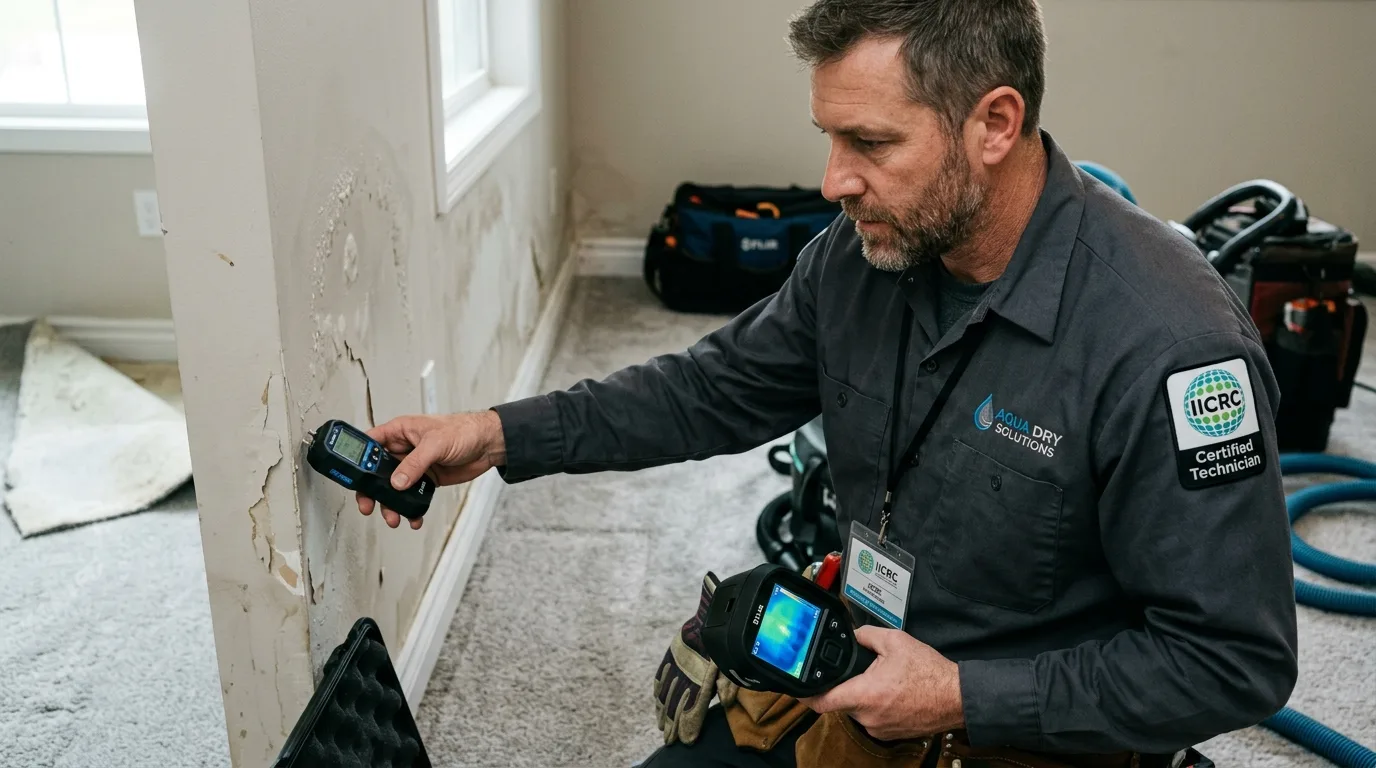
When water is flowing through your Lakewood home, choosing a restoration contractor feels urgent and overwhelming. You need someone now — and that urgency is exactly when cutting corners on credentials seems acceptable. It isn’t. The difference between an IICRC-certified restoration company and an uncertified one is the difference between documented, verifiable drying standards and guesswork — and in Jefferson County’s clay-soil environment, guesswork on structural drying leads to hidden mold, insurance claim disputes, and a repeat restoration project within 12 months. This post explains what IICRC certification actually means, why it matters specifically in Lakewood, and the questions you should ask before authorizing any restoration work.
Work With Lakewood's IICRC-Certified Restoration Team
Call (877) 698-1311 — every technician certified, every project documented to IICRC S500 standards.
What IICRC Certification Actually Means
The Institute of Inspection, Cleaning and Restoration Certification (IICRC) is the globally recognized standard-setting body for the restoration industry. Its certifications are not participation certificates — they require passing technical examinations that test knowledge of moisture science, psychrometrics, equipment deployment, mold biology, and remediation protocols. The two certifications most relevant to water damage restoration are:
WRT — Water Damage Restoration Technician. The foundational certification for water damage work. Covers moisture assessment, extraction techniques, drying science, and documentation standards. A technician without WRT certification should not be performing water damage restoration.
ASD — Applied Structural Drying. The advanced certification specific to structural drying systems. Covers psychrometric calculations for drying equipment placement, moisture measurement science, and documentation protocols required by insurance carriers. An ASD-certified technician can calculate the correct number and placement of dehumidifiers and air movers for your specific structure — rather than guessing.
IICRC-certified companies are listed in the IICRC locator at iicrc.org and can provide technician certification numbers for verification. Any company that cannot provide these numbers on request should be treated with skepticism.
Why IICRC Certification Matters Specifically in Lakewood, CO
Structural drying in Lakewood’s clay-soil environment is more technically demanding than drying in most other regions. Jefferson County’s expansive clay foundations extend drying timelines and create moisture gradients that require calibrated psychrometric monitoring to manage correctly. Dehumidification without proper placement calculations either under-dries (leaving moisture in framing and insulation) or over-dries (creating negative pressure differentials that draw moisture from soil into the structure). Either outcome is a failure that an uncertified contractor won’t have the tools or knowledge to detect.
Additionally, Lakewood homeowners pursuing insurance claims need restoration documentation that meets insurer requirements — moisture log records taken at defined intervals, thermal imaging reports, equipment placement records, and final clearance readings. IICRC-certified companies generate this documentation as a standard part of every project. Uncertified companies often don’t, and the gaps in documentation translate directly into claim denials or reduced settlements.
IICRC-Certified Restoration and Full Insurance Documentation
Lakewood Water Damage Pros — we provide the documentation your insurer requires. Call (877) 698-1311.
What Uncertified Water Damage Cleanup Actually Looks Like
Uncertified water damage contractors in the Lakewood and Denver metro market typically offer the following approach: extract visible water, set up fans and a standard dehumidifier, return in a few days to remove equipment, and declare the job complete. What this approach misses:
Thermal imaging. Without thermal imaging moisture detection, moisture in wall cavities, behind insulation, and under flooring is never identified and never dried. It remains in the structure, creating a mold environment within weeks.
Psychrometric calculations. Fan placement without calculating dew point, grains per pound humidity, and air movement dynamics is essentially random. The structure may appear to dry (surface materials reach target moisture) while wall cavities remain elevated.
Moisture documentation. No log of readings means no evidence that drying was completed. This is a problem when mold appears six months later and you need to demonstrate that the restoration was performed correctly.
Material removal assessment. An uncertified contractor may leave saturated insulation in place because removing it adds cost. Saturated insulation cannot be dried in place — it must be removed. Leaving it creates a long-term mold reservoir inside the wall.
Questions to Ask Any Water Damage Contractor in Lakewood
Before authorizing work, ask these questions and verify the answers:
- Are your technicians IICRC WRT and ASD certified? Can I see the certification numbers?
- Do you use thermal imaging for moisture mapping before and after drying?
- How do you calculate drying equipment placement?
- What moisture readings do you use to determine when drying is complete?
- Will you provide a moisture log with daily readings throughout the drying process?
- Are you registered with the City of Lakewood under the A-4 contractor classification for any reconstruction work?
- Can you provide documentation directly to my insurance carrier?
A legitimate IICRC-certified contractor will answer every one of these questions with specifics. Vague or deflecting answers are red flags. We welcome every one of these questions and provide documentation standards that satisfy insurance carriers across Jefferson County and the greater Denver metro area.
Frequently Asked Questions
How do I verify that a contractor is IICRC certified in Lakewood?
Visit iicrc.org and use the “Certified Firm Locator” or ask the contractor for the technician’s IICRC certification number, which you can verify directly. IICRC-certified firms are also required to maintain ongoing education requirements — certifications lapse if not renewed. Always verify before authorizing work, particularly for emergency situations where high-pressure sales tactics are common.
Is IICRC certification required by law for water damage contractors in Lakewood?
IICRC certification is not legally mandated in Colorado, but it is required or strongly preferred by most major insurance carriers when approving restoration work for claims. Insurers that prefer IICRC-certified contractors do so because the documentation and process standards reduce claim disputes. City of Lakewood contractor registration (A-4 classification) is required for reconstruction work — IICRC certification is separate but equally important.
What’s the difference between IICRC certified and “experienced” contractors?
Experience without standardized training is self-reported and unverifiable. IICRC certification requires passing a proctored examination that tests actual technical knowledge — not years in business. A contractor with 20 years of experience but no IICRC certification has been practicing whatever approach they learned on the job. An IICRC-certified technician has demonstrated competency against a nationally recognized technical standard. In Lakewood’s complex clay-soil environment, that difference in technical rigor matters.
Certified, Documented, and Accountable — Every Project
Lakewood Water Damage Pros — IICRC WRT and ASD certified. Full insurance documentation. Call (877) 698-1311.
Related: