How to File a Water Damage Insurance Claim in Lakewood, CO
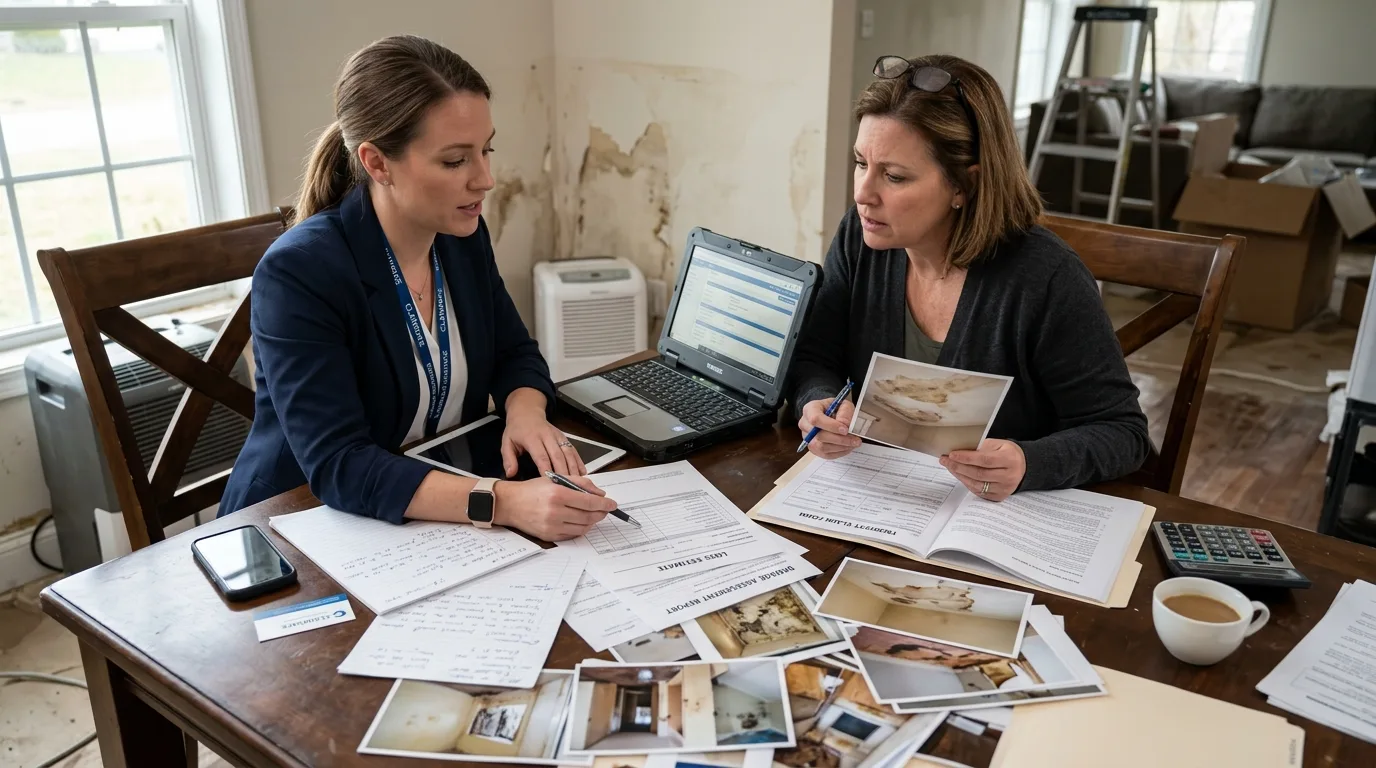
Colorado homeowner’s insurance pays out millions of dollars annually for water damage claims — but a significant percentage of those claims are reduced, delayed, or denied because of documentation gaps that policyholders didn’t know they needed to address in the first hours after the event. In Lakewood, where water damage events range from burst pipe emergencies in the Eiber neighborhood to spring snowmelt basement flooding near Bear Creek, the claims process is complicated further by the gap between what homeowners assume is covered and what standard policies actually include. This guide covers the complete claims process, the documentation your insurer requires, and how working with the right restoration company affects your claim outcome.
We Provide Complete Insurance Documentation for Your Lakewood Claim
Call (877) 698-1311 — thermal imaging reports, moisture logs, and scope-of-loss documentation for all carriers.
What Lakewood Homeowner’s Insurance Actually Covers
Standard homeowner’s insurance in Colorado covers sudden and accidental water damage — events that happen unexpectedly and cannot reasonably be attributed to maintenance neglect. Covered events typically include:
- Burst pipes — freezing-related supply line failures are explicitly covered in most policies
- Appliance failures — washing machine, dishwasher, water heater discharge
- Roof leaks from storm damage (wind, hail)
- Accidental overflow — tub, sink, toilet overflow
What standard policies typically exclude:
- Gradual leaks (any leak that existed for an extended period without reporting)
- Exterior flooding (requires separate NFIP or private flood insurance)
- Groundwater and surface water intrusion (including snowmelt seepage into basements)
- Sewage backup (requires a separate backup rider)
- Mold resulting from homeowner’s failure to act promptly
The Applewood and Green Mountain neighborhoods in Lakewood have a significant proportion of older homes where “gradual leak” exclusions create claim disputes — because aging supply lines and plumbing connections develop slow leaks that homeowners don’t notice until significant damage has occurred. Insurers investigate the timeline of damage and may deny claims where evidence suggests the leak predated the reported event.
Step 1: Take Action to Stop the Damage
Your insurance policy requires you to take reasonable steps to prevent further damage after a covered loss. Failure to do so can void coverage for damages that occur after the initial event. This means:
- Shut off the water supply to stop an active leak
- Call a restoration company to begin extraction — do not wait for the insurance adjuster to schedule an inspection
- Move salvageable contents out of the affected area if it can be done safely
Do not make permanent repairs before the insurer’s adjuster has inspected the damage. Temporary protective measures (tarping, boarding, extraction) are required and covered — permanent repairs before inspection may result in the insurer declining to cover them because conditions couldn’t be independently verified.
Step 2: Document Everything Before Cleanup Begins
Insurance adjusters require documentation of original damage conditions. Once cleanup begins, this evidence disappears. Before any extraction or cleanup:
- Photograph and video everything — water level, source of water, all affected rooms and materials
- Note the time of discovery — timestamp photos with your phone
- Document damaged contents — make a written list of items affected with estimated value and age
- Identify the source — photograph the burst pipe, overflowing appliance, or storm entry point
This documentation is the foundation of your claim. Missing or incomplete documentation is the most common reason for reduced claim settlements in Jefferson County.
Step 3: Notify Your Insurance Company Within 24 Hours
Most policies require “prompt notice” of a covered loss — and insurers interpret “prompt” literally. Call your insurer or file online within 24 hours of discovering the damage. When you call:
- Have your policy number ready
- Describe the event, date of discovery, and current status
- Ask specifically: Is this type of event covered? What is my deductible? Is there a mold endorsement on my policy?
- Request that an adjuster be scheduled immediately
If you wait several days to file, the insurer may question whether the damage occurred during the covered event or was pre-existing.
Filing a Water Damage Claim in Lakewood? We Help Every Step
Our team provides full documentation and works directly with your carrier. Call (877) 698-1311.
Step 4: Work With a Restoration Company That Provides Insurance Documentation
The documentation your restoration company generates during the project is what your insurer uses to determine the scope and value of your claim. IICRC-certified restoration companies provide:
Thermal imaging moisture reports — maps of moisture migration behind walls and under flooring that justify material removal scope
Daily moisture logs — dated readings showing moisture levels throughout the drying process, confirming drying was completed to certified standards
Scope of loss documentation — detailed inventory of all affected materials, dimensions, and restoration actions taken
Equipment placement records — confirmation that commercial-grade dehumidification and structural drying equipment was used
Restoration companies that don’t generate this documentation leave gaps in your claim that adjusters use to reduce settlement amounts. We provide complete documentation packages for every project we perform in Lakewood and throughout Jefferson County, and can transmit them directly to your carrier if preferred.
Step 5: Understand Your Deductible and Coverage Limits
Most Lakewood homeowners carry deductibles of $1,000–$2,500 on water damage claims. The deductible applies to the total claim — if your restoration and reconstruction total $8,000 and your deductible is $1,500, you pay $1,500 and the insurer covers $6,500 (subject to coverage limits and any depreciation calculations).
Actual Cash Value (ACV) vs. Replacement Cost Value (RCV) policies matter significantly for claims involving older materials. An ACV policy pays the depreciated value of damaged materials — a 15-year-old carpet may have minimal ACV even if replacement costs several thousand dollars. An RCV policy pays the full replacement cost. Know which type you have before filing, as this affects your settlement expectations.
Frequently Asked Questions
How long does a water damage insurance claim take in Lakewood?
Most straightforward claims in Jefferson County resolve within 2–4 weeks from initial filing to settlement check. Complex claims involving large reconstruction scope, coverage disputes, or depreciation disagreements can take 2–3 months. Working with a restoration company that provides complete documentation from day one is the best way to accelerate the timeline.
What if my Lakewood insurance claim is denied?
Request the denial in writing and ask for the specific policy language on which the denial is based. Common denial reasons — gradual leak exclusion, lack of documentation, late reporting — can sometimes be challenged with proper evidence. A public adjuster (a licensed professional who advocates for policyholders in disputes) can review your claim and denial and advise on appeal options. We can recommend licensed public adjusters who serve the Lakewood and Jefferson County area.
Does water damage restoration have to be done before the insurance adjuster visits?
Emergency extraction — stopping active flooding — should begin immediately regardless of adjuster scheduling. The insurer cannot require you to leave standing water in your home for days while an adjuster is scheduled. Document thoroughly before extraction begins. All subsequent work (drying, demolition, reconstruction) should be coordinated with your adjuster, who will typically authorize the scope during an on-site inspection within 2–5 business days of filing.
Get Complete Insurance Documentation for Your Lakewood Claim
Lakewood Water Damage Pros works with all major carriers and provides full documentation. Call (877) 698-1311.
Related: