Spring Snowmelt in Lakewood: How to Protect Your Basement from Flooding
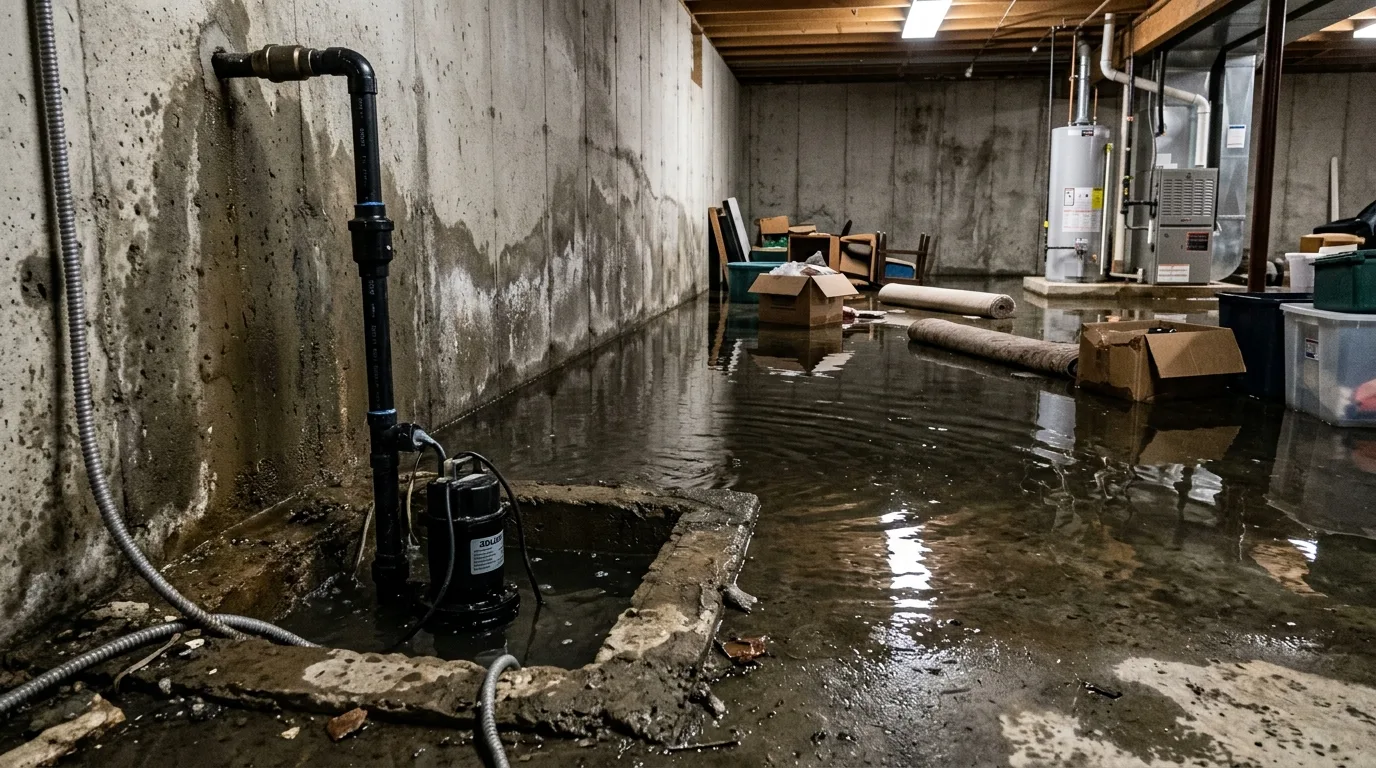
Does your Lakewood basement flood every spring, or have you started noticing seepage patterns you’ve never seen before? Jefferson County’s snowmelt season — typically March through May — is the single most predictable source of basement flooding on Colorado’s Front Range. Accumulated snowpack releases over weeks, saturating clay soils that then press against foundation walls with thousands of pounds of hydrostatic pressure. In this post, we cover what drives springtime basement flooding in Lakewood specifically, how homeowners in the Bear Creek and Kendrick Lake neighborhoods can prepare before snowmelt begins, and what to do when your basement floods despite those preparations.
Basement Flooding in Lakewood? We're Available 24/7
Call (877) 698-1311 for immediate basement flood response throughout Lakewood and Jefferson County.
Why Snowmelt Causes Basement Flooding in Lakewood More Than Most Colorado Cities
Lakewood’s position at the base of the Front Range foothills creates a concentrated snowmelt risk. Snow that falls on the mountain slopes above Green Mountain and the Bear Creek watershed doesn’t melt where it lands — it migrates downslope as it thaws, arriving in Lakewood’s lower residential areas weeks after the mountain snowpack begins to recede. The Bear Creek Lake Park floodplain absorbs some of this volume, but neighboring residential streets and the basements beneath them absorb much of the rest.
Jefferson County’s expansive clay soils compound the problem. When these soils absorb the snowmelt volume, they swell significantly — increasing hydrostatic pressure against foundation walls. Homes built before the 1990s in the Kendrick Lake and Applewood neighborhoods rarely have the drainage tile systems or waterproofing membranes that would redirect this pressure away from the foundation. Instead, water finds the path of least resistance: foundation cracks, floor-wall joints, and window wells.
How to Prepare Your Lakewood Basement Before Snowmelt Season
Inspect and maintain your sump pump (February). Sump pump failure is the leading cause of basement flooding during Lakewood’s snowmelt season. Test your pump in February by pouring water into the pit and confirming it activates and discharges properly. Check the discharge line to ensure it’s clear of ice and discharging at least 10 feet from the foundation. Install a battery backup system — power outages during spring storms can disable a pump at exactly the wrong time.
Clear window wells and extensions (late February). Window well covers prevent snow accumulation directly against basement windows. If your windows lack covers, install them before March. Check that existing covers are secure and that well drains — if present — are clear of debris.
Extend downspouts (before first thaw). Downspouts that discharge near the foundation add roof runoff to the snowmelt pressure already building in the soil. Extensions directing discharge at least 6 feet from the foundation significantly reduce the moisture load against the basement wall.
Monitor soil grading around the foundation. Soil that has settled toward the foundation directs surface water inward rather than away. Add soil to low spots along the foundation perimeter before the ground freezes, creating a positive grade that sheds snowmelt away from the structure.
What to Do If Your Lakewood Basement Floods from Snowmelt
Step 1: Turn off power to the basement before entering. Standing water and electrical outlets are a lethal combination. Turn off the circuit breaker serving the basement level before entering if water is present on the floor.
Step 2: Document before you touch anything. Photograph the water level, source (seeping through the wall, flooding through the floor drain, window well overflow), and any damage to contents. This documentation is required for your insurance claim. Time-stamp photos are best — use your phone camera without editing.
Step 3: Call for professional extraction immediately. A household wet-vac handles small volumes but cannot match the output of truck-mounted extraction equipment. Sump pump failure with several inches of standing water requires professional equipment for complete removal. Every hour of delay allows water to migrate further into wall assemblies, insulation, and subfloor — driving up the total restoration cost. Dehumidification equipment must be placed immediately after extraction to begin structural drying.
Step 4: Do not run box fans. An uncontrolled fan in a wet environment circulates mold spores and does not generate the pressure differential needed for structural drying. Commercial air movers with calibrated dehumidification are the correct tools — a fan simply moves moisture around the room without removing it from the structure.
Spring Snowmelt Flooding Response — Lakewood & Jefferson County
24/7 basement flood cleanup — call (877) 698-1311 the moment your basement starts flooding.
Common Snowmelt Entry Points in Lakewood Basements
Floor-wall joint seepage. The joint between the basement floor slab and the foundation wall is a common entry point, especially when hydrostatic pressure from saturated clay soil is high. Water appears as a thin line of seepage along the base of the wall during peak snowmelt.
Foundation wall cracks. Vertical and horizontal cracks in poured concrete or block foundation walls allow pressurized water to enter directly. Horizontal cracks in particular indicate structural pressure from soil movement — a concern that warrants evaluation beyond just waterproofing.
Window well overflow. Window wells that fill with snowmelt overflow into the basement through the window frame or around improperly sealed window installations.
Sump pit overflow. A functioning sump system collects and removes water from beneath the slab. When the pump fails or the volume exceeds the pump’s capacity, the pit overflows and water spreads across the basement floor.
Frequently Asked Questions
Is basement snowmelt flooding covered by homeowner’s insurance in Lakewood?
Most standard homeowner’s insurance policies do not cover flooding that enters from outside the structure — including snowmelt seepage. This type of event typically requires a separate flood insurance policy through NFIP or a private carrier. However, if the flooding was caused by a sump pump failure due to a covered peril (electrical surge, mechanical failure), your policy’s equipment breakdown endorsement or a sump backup rider may apply. Review your policy carefully and call your insurer immediately after a flood event. We provide full documentation to support whatever coverage applies.
How long does it take to dry a Lakewood basement after snowmelt flooding?
Structural drying after a basement snowmelt flood in Lakewood takes 5–10 days in most cases, with homes in the Kendrick Lake and Bear Creek areas — where clay soils hold moisture against foundation walls — often requiring the longer end of that range. Commercial dehumidification and air movers remain in place until moisture readings in wall assemblies, concrete, and subfloor confirm safe levels. We check readings daily and remove equipment only when certified dry.
What’s the difference between waterproofing and flood cleanup?
Flood cleanup (extraction, drying, remediation) addresses damage that has already occurred. Waterproofing prevents future intrusion by redirecting moisture away from the foundation — through interior drain tile, exterior membrane application, or improved grading and drainage. Both are often needed after a significant snowmelt flood: cleanup first, then waterproofing during or after reconstruction to prevent recurrence. See our full basement flooding service page for details on the full process.
Protect Your Lakewood Basement from Snowmelt Flooding
Lakewood Water Damage Pros — 24/7 basement flood response, extraction, and structural drying throughout Jefferson County. Call (877) 698-1311.
Related: