Why Burst Pipes Are Common in Lakewood Winters (And What to Do)
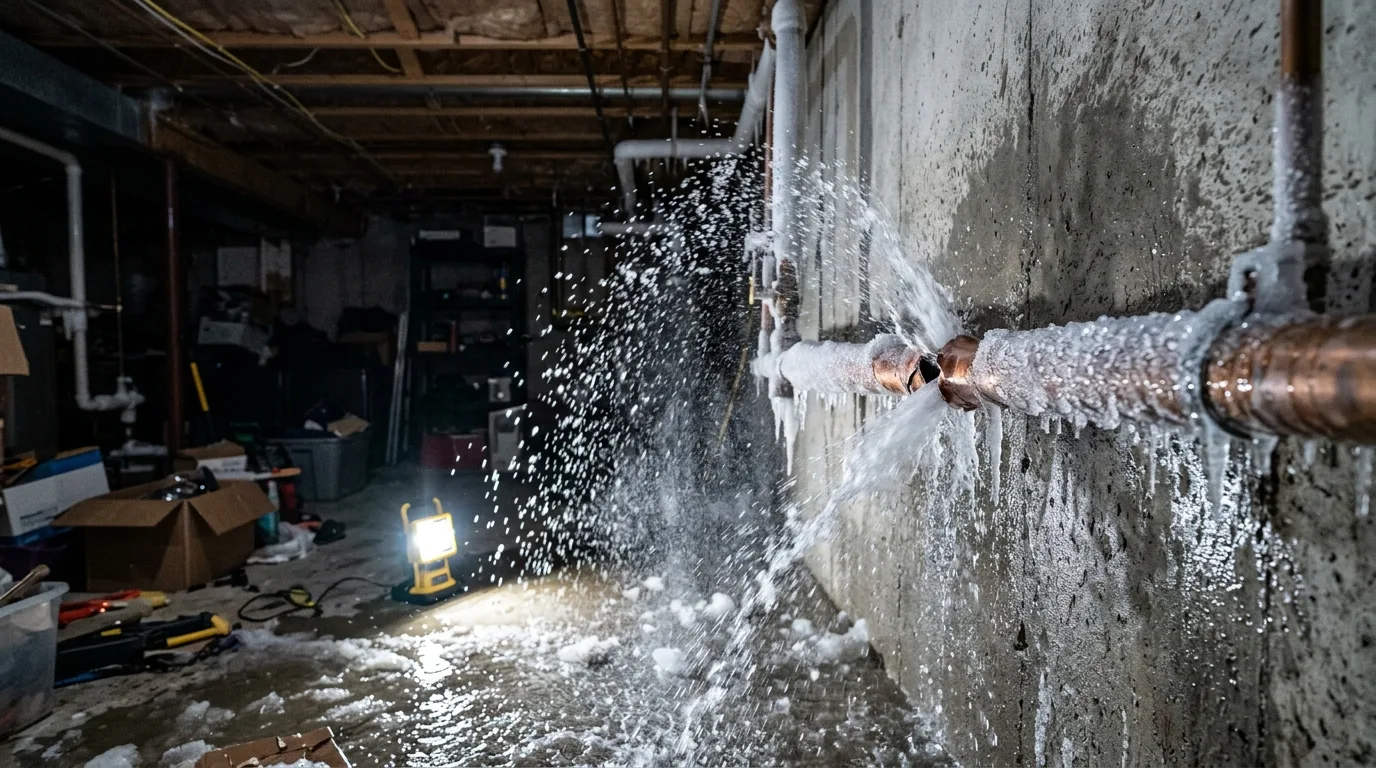
Imagine waking up to the sound of running water — not from a faucet, but from inside your walls. That’s the scenario Lakewood homeowners face every winter when freeze-thaw cycling turns small pipe vulnerabilities into full-blown bursts. A burst pipe can release hundreds of gallons per hour before it’s discovered, saturating framing, insulation, and finished surfaces throughout multiple rooms. The result is one of the most expensive and disruptive forms of water damage restoration, yet it’s one of the most preventable. In this post, we cover exactly why burst pipe repair calls spike in Lakewood every winter, which pipes are most vulnerable, and the steps you need to take in the first minutes after a burst occurs.
Burst Pipe in Your Lakewood Home? Call Now — 24/7
(877) 698-1311 — 60-minute emergency response for burst pipe water damage throughout Lakewood and Jefferson County.
Why Lakewood’s Freeze-Thaw Cycling Causes More Pipe Bursts Than Sustained Cold
Most homeowners think pipes burst during the coldest nights of winter. The reality is more nuanced: it’s not sustained cold that causes most burst pipes in Lakewood — it’s the rapid oscillation between freezing and thawing that defines Jefferson County’s winter weather pattern. Lakewood’s elevation at approximately 5,400 feet creates conditions where overnight temperatures drop well below freezing while afternoon temperatures regularly climb above 40°F. Pipes that begin to freeze overnight thaw partially during the day, with the expanding ice creating internal pressure cycles that eventually fatigue and fail pipe material — particularly at solder joints and threaded fittings on older supply lines.
Homes in the Eiber and Belmar neighborhoods with original copper or galvanized supply lines from the 1950s–1970s are particularly susceptible. These pipes have 50+ years of corrosion at joints, and their thinner original wall thickness offers less resistance to freeze-cycle pressure than modern PEX or thicker copper supply lines. The insurance claim assistance that follows a burst pipe is standard, but the restoration cost — typically $2,500–$8,000+ including water extraction and structural drying — is the real price of inadequate winterization.
Which Pipes Are Most Likely to Burst in Lakewood Homes
Exterior wall supply lines. Pipes running through exterior walls without adequate insulation are the highest-risk locations in Lakewood homes. Cold air infiltration through gaps in exterior sheathing can drop the temperature inside an exterior wall cavity to below freezing even when the interior is heated to 68°F.
Pipes in unheated spaces. Crawlspaces, attached garages, and unconditioned attic spaces that contain supply lines are vulnerable when temperatures drop significantly overnight. The Green Mountain and Applewood neighborhoods, where many homes have attached garages built in earlier decades without heated floor plans, see predictable garage-area pipe bursts during cold snaps.
Hose bibs and exterior connections. Any supply line feeding an exterior hose bib that was not properly winterized (shutoff valve closed, interior valve bled) is at high risk during the first hard freeze of the season.
Supply lines under kitchen and bathroom sinks on exterior walls. Cabinet doors kept closed trap cold air from the exterior wall behind exterior-facing sink cabinets, reducing the thermal protection the cabinet space provides.
What to Do in the First Five Minutes After a Pipe Bursts
1. Shut off the main water supply immediately. Every adult in the household should know where the main water shutoff valve is located. In most Lakewood homes it’s in the basement utility area near the water meter. Turn it clockwise until completely closed. This is the single most important action — shutting off the water prevents a gallons-per-minute flood from continuing for the hours it might take before a plumber arrives.
2. Turn off the water heater. With no water supply to the heater, the element or burner can overheat. Turn the water heater to “vacation” or “off” mode once the main supply is closed.
3. Open faucets to relieve pressure. Opening faucets throughout the home allows remaining water in the lines to drain rather than continue pressurizing the break point.
4. Call a restoration company immediately — before the plumber. The plumber will fix the pipe, but the water that’s already entered your walls, floors, and ceilings is a separate problem. Structural drying must begin within hours of the event to prevent mold. Call for water extraction and dehumidification dispatch while the plumber is en route. Every hour of delay allows water migration to extend further into building materials.
5. Document with photos before cleanup. Insurance requires documentation of original damage — photograph the break point, standing water, and all affected areas before any cleanup begins.
Water Damage from a Burst Pipe in Lakewood?
We handle extraction, structural drying, and insurance documentation. Call (877) 698-1311 — available 24/7.
How to Prevent Burst Pipes in Your Lakewood Home
Insulate vulnerable pipes before November. Foam pipe insulation ($2–$5 per linear foot at any hardware store) on exterior wall supply lines and pipes in unconditioned spaces provides meaningful freeze protection. Focus on the pipe runs most exposed to exterior temperatures.
Maintain minimum heat in all areas of the home. When leaving for vacation in winter, keep your thermostat at a minimum of 55°F. Do not lower it to save energy — the restoration cost of a burst pipe vastly exceeds any heating savings.
Shut off and drain hose bibs. Before the first freeze (typically late October in Lakewood), close the interior shutoff valve serving each exterior hose bib and open the exterior bib to drain remaining water from the line.
Open cabinet doors under exterior-facing sinks. On nights when temperatures are forecast to drop below 20°F, open sink cabinet doors to allow heated interior air to circulate around supply lines.
Frequently Asked Questions
How much does burst pipe water damage restoration cost in Lakewood?
Water damage from a burst pipe in Lakewood typically costs $2,500–$8,000 for mitigation (extraction and structural drying) depending on how long the pipe ran before discovery and how many rooms were affected. If the event went undetected overnight, drywall removal and extended structural drying are typically required. Total costs including plumbing repair and reconstruction range from $5,000–$15,000+ for significant events. Insurance claim assistance is standard — most covered policies include sudden and accidental pipe burst events.
How long does burst pipe water damage restoration take in Lakewood?
Extraction and initial setup of drying equipment takes 4–8 hours. Structural drying continues for 5–10 days depending on the extent of saturation. Reconstruction follows after certified drying is complete, adding 1–3 weeks depending on scope. The full process from burst pipe to fully restored home typically takes 3–6 weeks for a significant event in a Lakewood home.
Does insurance cover burst pipe damage in Lakewood, CO?
Standard homeowner’s insurance covers sudden and accidental pipe bursts — this is one of the most commonly covered water damage events. Coverage typically includes: the cost of accessing the pipe (opening the wall), the water extraction and structural drying, and reconstruction of damaged materials. It does not cover the pipe repair itself (that’s a maintenance item) or any pre-existing gradual leak damage. Document everything and call your insurer within 24 hours of discovery.
Burst Pipe Damage Restored by Lakewood's Trusted Team
Call Lakewood Water Damage Pros at (877) 698-1311 for 24/7 burst pipe water damage response throughout Jefferson County.
Related: