Lakewood's Expansive Clay Soils: How They Cause Foundation Water Damage
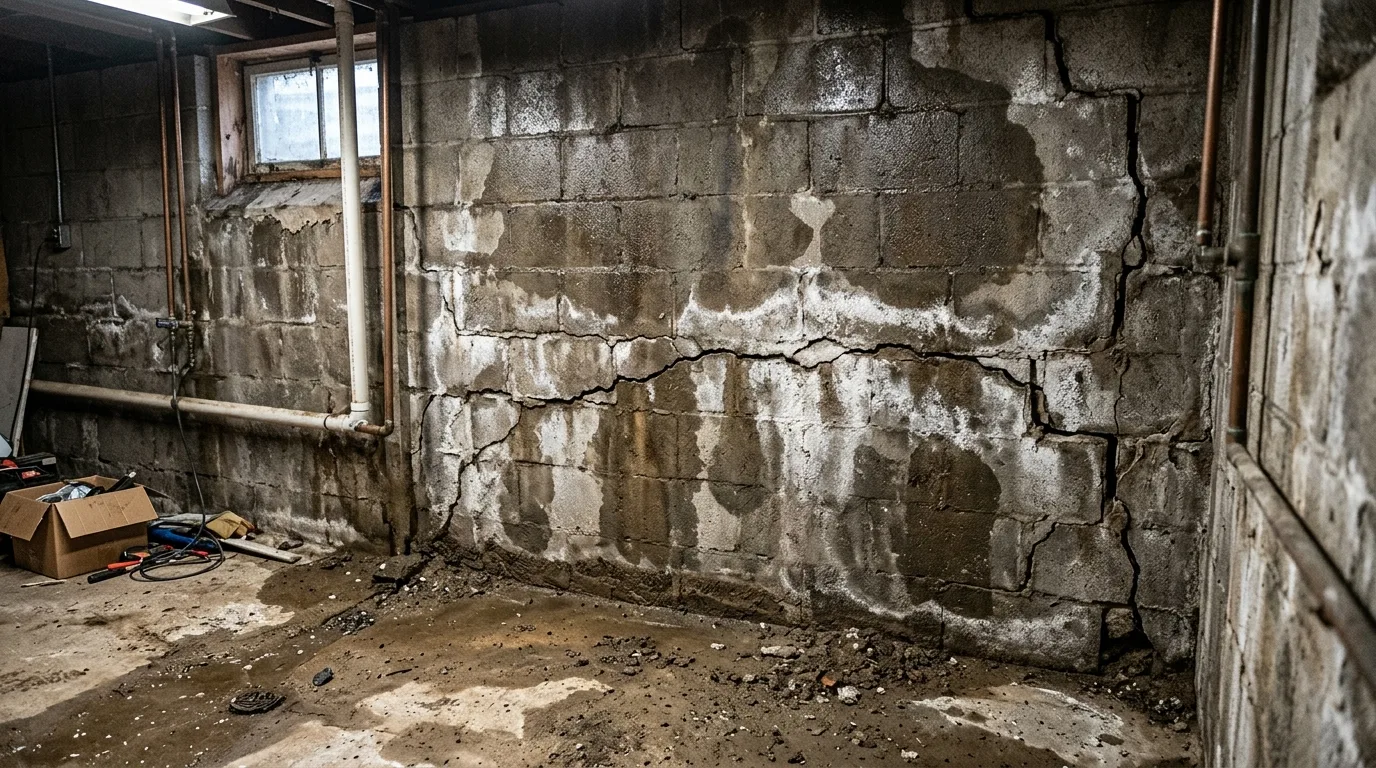
According to the Colorado Geological Survey, expansive soils and claystones underlie much of the Denver metro Front Range — and Lakewood sits squarely on some of Jefferson County’s most clay-rich terrain. These soils absorb water and swell by up to 10% of their volume when wet, then shrink and crack when dry — a cycle that exerts tremendous force on foundation walls, causes slab heave, opens new water intrusion pathways every season, and creates recurring basement flooding that standard waterproofing approaches struggle to resolve permanently. In this post, we cover how Lakewood’s specific soil profile drives water damage risk, which neighborhoods are most affected, and what homeowners can do about it.
Foundation Moisture Issues in Your Lakewood Home?
Call (877) 698-1311 for a professional moisture assessment — we identify soil-driven water intrusion and provide lasting solutions.
Why Expansive Clay Soils Are a Bigger Water Damage Driver Than Most Homeowners Realize
Most people think of water damage as something that happens during an acute event — a pipe burst, a flood, a storm. But in Lakewood, the leading cause of long-term basement water intrusion is not an event at all — it’s a seasonal cycle that plays out every year in the soil surrounding the foundation. Understanding this cycle explains why many Lakewood homeowners treat repeated basement moisture as a normal condition when it’s actually a progressive structural drying and waterproofing problem that compounds over time.
During spring snowmelt and summer thunderstorm events, Jefferson County’s clay soils absorb large volumes of water. The soil swells, pressing against foundation walls with hydrostatic force that can exceed 2,000 pounds per square foot on a below-grade wall. Any crack, joint, or gap in the foundation — no matter how small — becomes a water entry point under this pressure. Thermal imaging moisture detection during our assessments consistently reveals water migration patterns in Lakewood homes that correspond directly to seasonal clay-soil saturation cycles, even when the homeowner has never experienced a visible flood.
Which Lakewood Neighborhoods Face the Highest Clay-Soil Water Risk
Applewood. Developed primarily in the 1950s and 1960s on Jefferson County’s front-range clay, Applewood’s mid-century homes have foundations that predate modern drainage systems and waterproofing membranes. The mature trees in this neighborhood add another layer of risk: established root systems seek moisture and can intrude into aging drain tiles or crack aging block foundation walls.
Kendrick Lake. The Kendrick Lake neighborhood’s proximity to the lake itself creates a water table dynamic that interacts with clay-soil saturation — groundwater levels near Kendrick Lake Park fluctuate seasonally, and during wet years, this groundwater contributes to foundation pressure independent of surface snowmelt or rainfall.
Eiber. Eiber’s established residential blocks contain a concentration of pre-1970s construction where original foundation waterproofing — typically a tar-based coating applied at the exterior — has long since degraded. Clay soil pressing against these unprotected walls creates predictable seasonal seepage.
Bear Creek. Properties along the Bear Creek corridor sit in or adjacent to the floodplain of Bear Creek Lake Park, where seasonal water table elevation directly correlates with spring snowmelt volume. These homes experience a combination of surface flooding risk and groundwater pressure that makes foundation moisture intrusion the norm rather than the exception during wet years.
Is Clay Soil Damaging Your Lakewood Foundation?
Our team identifies soil-driven water intrusion and recommends lasting solutions. Call (877) 698-1311 for a free assessment.
How Clay Soil Damage Differs from Acute Water Damage Events
Soil-driven foundation water intrusion is a slow, chronic process rather than an acute event — and this distinction affects how it’s treated and how it’s covered by insurance. Standard homeowner’s insurance covers sudden and accidental water damage but explicitly excludes gradual leaks and “earth movement” including soil pressure. This means that the long-term water intrusion damage from clay-soil cycling is typically not covered by insurance, while a sudden pipe burst in the same basement is.
From a structural drying perspective, soil-driven moisture intrusion presents differently than acute flood events. Instead of bulk water on the floor, technicians find elevated moisture readings in concrete foundation walls, wood sill plates resting on the foundation, and first-floor framing immediately above grade — without any standing water to indicate a source. Mold remediation in these situations often reveals growth that has been developing for months or years inside wall cavities, fed by the chronic moisture supply from clay-soil contact.
What to Do About Clay-Soil-Driven Water Damage in Lakewood
Interior drain tile with sump system. An interior perimeter drain installed below the basement slab collects groundwater before it can rise to floor level and routes it to a sump pit for pump discharge. This is the most reliable solution for chronic groundwater-driven basement moisture in Jefferson County’s clay-soil environment — it works with the hydrology rather than against it.
Exterior waterproofing membrane. Excavating around the foundation and applying a modern waterproofing membrane with drainage board is the most comprehensive solution but also the most expensive and disruptive. Best suited for homes being extensively renovated or where interior solutions are impractical.
Improved surface grading and drainage. Ensuring soil grades away from the foundation and that gutters discharge far from the structure reduces the volume of surface water that saturates the clay soil immediately around the foundation — reducing hydrostatic pressure at the source.
Professional moisture monitoring. Annual thermal imaging inspections in spring and fall catch new moisture intrusion before mold establishes. This is particularly valuable for Applewood and Kendrick Lake homeowners whose clay-soil exposure creates predictable seasonal moisture windows.
Frequently Asked Questions
Does clay soil water damage qualify for insurance coverage in Lakewood?
Generally, no. Insurance covers sudden accidental events, not gradual seepage or soil pressure damage. However, if clay-soil moisture has caused a pipe to fail, or if a sudden snowmelt event has caused a rapid basement flood, those triggering events may be covered even if the underlying soil condition is not. Review your policy carefully and call your insurer after any significant water event. We provide complete documentation regardless of coverage status.
How do I know if clay soil is causing my Lakewood basement moisture?
Seasonal patterns are the strongest indicator — moisture that appears consistently in spring and/or late summer, or that appears after significant rainfall without any identifiable interior source. Professional thermal imaging moisture detection maps intrusion patterns that correspond to soil-contact points, confirming soil-driven entry versus plumbing or roof-based sources. Call (877) 698-1311 for an assessment.
Can basement flooding from clay soil be permanently fixed in Lakewood?
Yes — with the right combination of interior drainage, sump system, and exterior grading improvements. No single solution works in all situations, and the right approach depends on the severity of saturation, the age and construction of the foundation, and the water table depth. See our basement flooding service page for how we assess and address chronic soil-driven intrusion in Lakewood homes.
Get Your Clay-Soil Moisture Problem Diagnosed
Lakewood Water Damage Pros — thermal imaging assessments and lasting solutions for Jefferson County's clay-soil water intrusion challenges. Call (877) 698-1311.
Related: