5 Signs You Have Hidden Water Damage in Your Lakewood Home
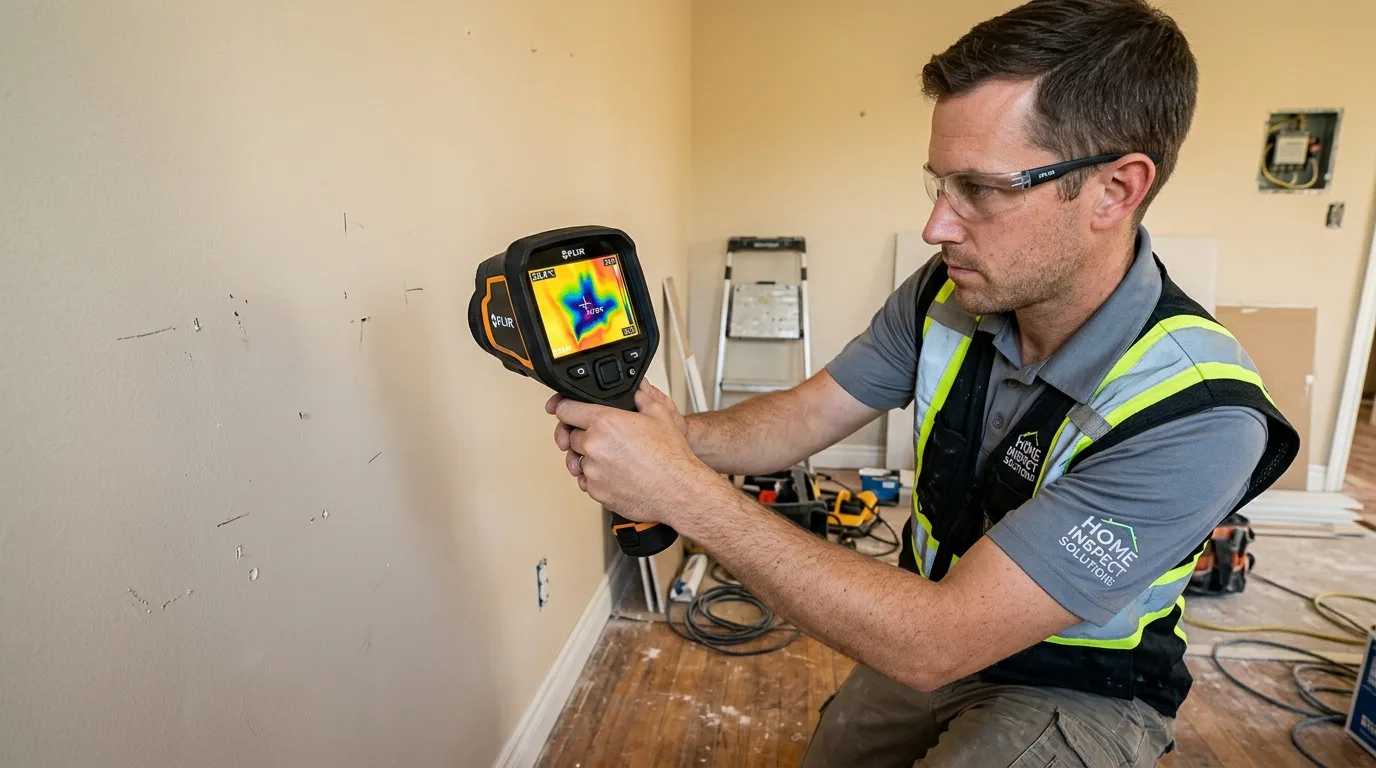
A burst pipe or basement flood announces itself immediately — but most water damage in Lakewood homes goes undetected for weeks or months. Slow plumbing leaks, foundation seepage in the Kendrick Lake neighborhood, and roof penetrations from ice dams all introduce moisture into wall cavities and subfloor assemblies without any visible evidence on the finished surface. By the time you notice a stain or smell a musty odor, mold has typically been growing for several weeks. In this post, we cover the five signs that hidden water damage is present in your Lakewood home, why thermal imaging moisture detection is the only reliable way to confirm it, and what to do when you find it.
Suspect Hidden Water Damage in Your Lakewood Home?
Call (877) 698-1311 for a thermal imaging moisture inspection — we find what's hiding behind your walls.
Why Hidden Water Damage Is So Common in Lakewood, CO
Lakewood’s housing stock creates several conditions that make hidden moisture intrusion the norm rather than the exception. Mid-century homes in the Belmar and Applewood neighborhoods were built with wall assemblies that lack modern vapor barriers — moisture from Lakewood’s expansive clay soils migrates through foundation walls and into finished wall cavities without any visible surface evidence until the damage is significant. Jefferson County’s annual freeze-thaw cycling puts repeated stress on pipe connections inside walls, and small drips at a fitting can continue for months before the structural drying capacity of surrounding materials is overwhelmed.
Structural drying science tells us that wood framing can hold elevated moisture content for months without visible discoloration — meaning water that entered your walls during last spring’s snowmelt might still be present in July, slowly cultivating the mold colony you’ll discover in the fall. Thermal imaging moisture detection is the tool that makes hidden water visible to trained technicians before it reaches that stage.
Sign 1: Unexplained Musty Odor, Especially in the Basement
The most reliable early indicator of hidden water damage is smell — specifically the earthy, musty odor of mold establishing in a moisture-saturated environment. This smell is frequently dismissed or attributed to normal basement dampness, particularly in older Lakewood homes where some level of moisture odor has always been present. The distinction is that a new or intensifying musty smell, or one that concentrates in a specific area of the home, indicates active biological growth that thermal imaging moisture detection can usually pinpoint to a source.
Basements in the Bear Creek area, where the water table sits closer to the surface during spring snowmelt, develop this odor pattern predictably when foundation seepage begins. Do not use deodorizers or air fresheners to mask the smell — you need to identify the source, not cover it. Mold remediation addresses the underlying cause; air fresheners delay the discovery.
Sign 2: Discoloration or Staining on Walls or Ceilings
Water stains on drywall or ceilings — yellow, brown, or rust-colored patches — indicate that moisture has migrated through a material to its surface. The stain itself is not the active leak; it’s evidence of a past or ongoing moisture event. Many Lakewood homeowners patch and paint over these stains assuming the leak has stopped, only to discover months later that the wall cavity is heavily contaminated with mold.
Staining in the Eiber neighborhood’s older plaster walls often appears directly above aging plumbing supply lines running in the interior of walls — a location where leaks can go undetected for months because the plaster absorbs moisture slowly and doesn’t buckle or bubble the way modern drywall would. Any stain that has appeared without an obvious explanation (known roof leak, pipe burst) warrants a moisture inspection.
Sign 3: Buckling, Warping, or Soft Flooring
Hardwood flooring that cups, warps, or develops a soft spot indicates sustained moisture exposure from below — either from subfloor saturation or crawlspace humidity wicking up through the floor assembly. In Lakewood, this pattern commonly appears in first-floor rooms adjacent to a basement that has experienced repeated spring snowmelt seepage, even if the basement flood was addressed at the surface level.
Soft spots in subfloor material — particularly noticeable as a slight bounce underfoot — often indicate that OSB or plywood subfloor has delaminated from sustained moisture exposure. This is a structural drying failure: the surface flood was extracted, but the subfloor never fully dried, and biological deterioration followed. By the time the soft spot is noticeable, the subfloor material typically requires replacement rather than salvage.
Soft Floor or Musty Smell in Your Lakewood Home?
Our thermal imaging inspection finds hidden moisture before it becomes a major repair. Call (877) 698-1311.
Sign 4: Peeling Paint or Bubbling Drywall
Paint that peels, bubbles, or fails to adhere on interior walls — particularly in bathrooms, kitchens, or basement walls — indicates that moisture is migrating through the substrate and disrupting the paint bond. This is distinct from paint that simply ages and chips; moisture-driven paint failure typically appears in isolated areas that correspond to a moisture source behind the wall.
In Jefferson County homes with clay-soil foundation contact, this pattern frequently appears on below-grade basement walls where the waterproofing membrane has failed and hydrostatic pressure is pushing moisture through the concrete. The paint is the symptom; the waterproofing failure is the cause. Professional assessment with thermal imaging and calibrated moisture meters can distinguish between residual surface moisture and ongoing active intrusion — a distinction that determines whether the fix is a one-time intervention or an ongoing waterproofing project.
Sign 5: Spike in Water Bills Without Explanation
An unexpected increase in your monthly water bill — particularly during periods when household usage hasn’t changed — is a reliable indicator of a running leak somewhere in the plumbing system. Hidden supply line leaks inside walls are the most common cause in Lakewood’s mid-century housing stock, where original copper or galvanized supply lines are now 50–70 years old and increasingly prone to pinhole leaks at solder joints and threaded fittings.
A 10–15% increase in water consumption without a corresponding increase in household use warrants a professional leak detection inspection. Leak water that runs inside walls and is absorbed by framing and insulation never reaches the structure’s surface until the cavity is fully saturated — by which point, dehumidification alone is insufficient and structural material removal is necessary.
What to Do If You Suspect Hidden Water Damage in Lakewood
If any of these signs are present in your Lakewood home, do not delay inspection. The cost of identifying and addressing hidden water damage in its early stages — before mold establishes and structural materials deteriorate — is a fraction of the cost of full mold remediation and structural replacement. Call Lakewood Water Damage Pros at (877) 698-1311 for a professional thermal imaging moisture inspection.
Frequently Asked Questions
Can I test for hidden water damage myself in Lakewood?
Consumer moisture meters can detect elevated moisture on accessible surfaces, but they cannot penetrate wall assemblies or identify moisture behind finished materials. Thermal imaging cameras — the professional standard for hidden moisture detection — identify temperature differentials that correspond to wet structural materials, allowing technicians to map moisture migration without opening walls. DIY moisture checks are useful for monitoring known wet areas but cannot substitute for professional thermal imaging inspection.
How much does a moisture inspection cost in Lakewood?
Professional thermal imaging moisture inspections in Jefferson County typically cost $150–$400 depending on the size of the property and whether the inspection is standalone or part of a restoration assessment. Lakewood Water Damage Pros includes thermal imaging as part of every water damage assessment at no charge — call (877) 698-1311 to schedule.
How quickly does hidden water damage become mold in Lakewood?
Mold colonization begins within 24–48 hours in environments with moisture above 70% relative humidity. Hidden water in wall cavities maintains high relative humidity indefinitely. Once established, mold spreads to adjacent surfaces every 24–48 hours. In Lakewood’s clay-soil environment, where moisture wicks slowly from foundation contact, mold can establish over weeks without triggering any visible warning sign at the finished surface.
Find Hidden Water Damage Before It Becomes Mold
Lakewood Water Damage Pros provides thermal imaging moisture inspection throughout Lakewood and Jefferson County. Call (877) 698-1311.
Related: