How Lakewood's Climate Creates Unique Water Damage Risks
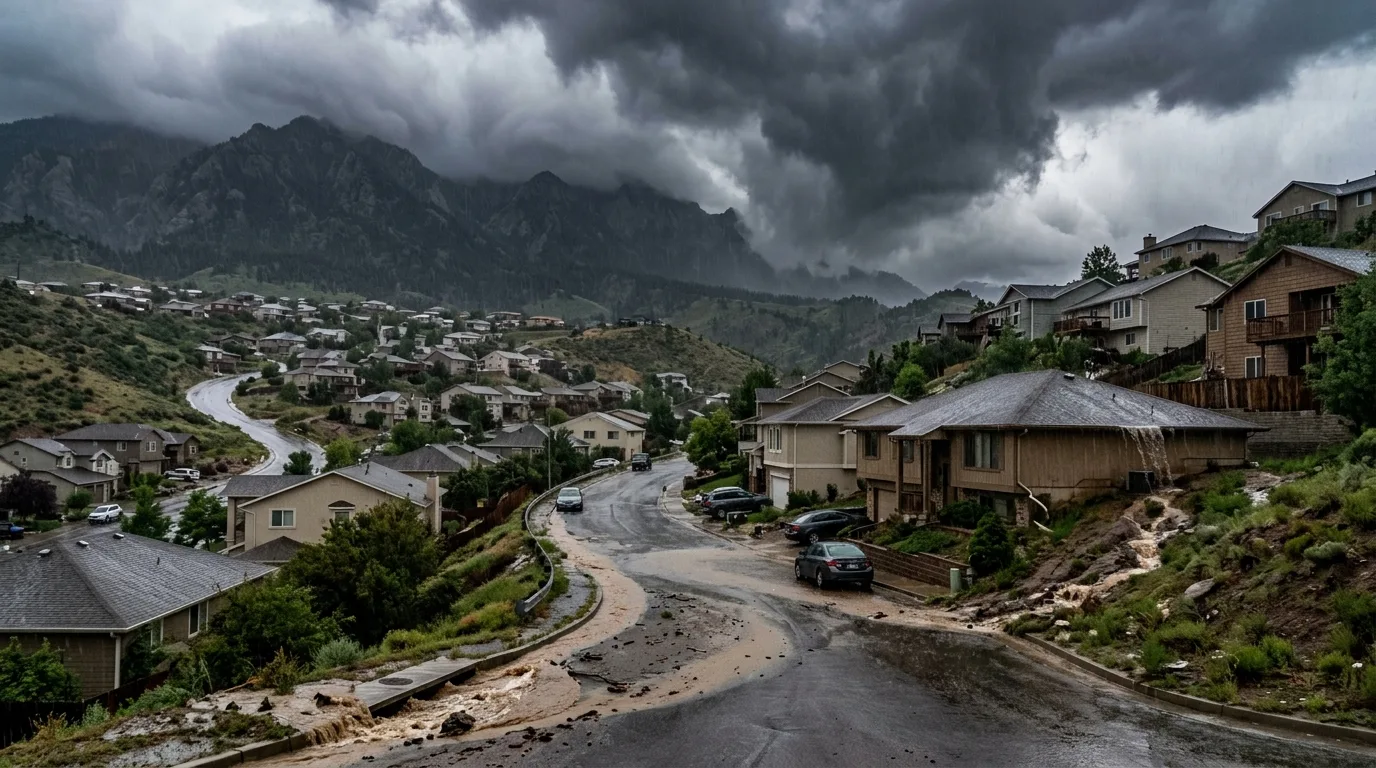
Lakewood averages just 16 inches of precipitation annually — about half of Seattle’s rainfall. Yet the city consistently generates significant water damage restoration demand across all four seasons. The apparent contradiction disappears once you understand how Lakewood’s climate distributes moisture risk: not as gentle, steady rainfall that structures can accommodate, but as concentrated seasonal events that overwhelm drainage systems, freeze and thaw pipes repeatedly, and deliver snowmelt volumes that outlast the landscape’s ability to absorb them. In this post, we map how each of Lakewood’s four seasonal climate patterns creates distinct water damage risks for Jefferson County homeowners, and what those risks mean for preparation and response.
Lakewood's Climate Creates Year-Round Water Damage Risk
24/7 emergency response throughout Jefferson County. Call (877) 698-1311 whenever water damage occurs.
Winter (December–February): Freeze-Thaw and Burst Pipes
Lakewood’s winter climate is defined by temperature volatility rather than sustained cold. Unlike mountain communities where temperatures stay below freezing for weeks at a time, Lakewood’s Front Range location produces cycles where overnight temperatures drop to 10–20°F and afternoon temperatures climb above freezing the same day. A week of these cycles can apply dozens of freeze-thaw stress cycles to water-filled pipes inside exterior walls.
The burst pipe repair demand in Lakewood consistently peaks in January and February — particularly during extended cold snaps when overnight lows stay below 10°F for multiple consecutive nights. Properties in the Applewood neighborhood, where mature landscaping shades exterior walls from the afternoon sun that would otherwise moderate wall temperatures, see disproportionate pipe burst rates during these events. The structural drying timeline after a winter pipe burst is extended by the cold ambient temperatures that slow moisture evaporation from structural materials.
Preparation: Insulate exterior wall pipe runs before November. Know where your main shutoff is located. Keep interior temperatures above 55°F even when away. Install smart water leak sensors near the most vulnerable supply lines — washing machine connections, under kitchen sinks, and water heater supply lines.
Spring (March–May): Snowmelt Flooding and Foundation Pressure
Spring is Lakewood’s highest-risk season for water damage volume. The Front Range snowpack — accumulated through winter — begins releasing in earnest by mid-March. Unlike rain events that end and allow soil to partially drain, snowmelt delivers a sustained moisture supply for weeks that keeps Jefferson County’s clay soils saturated against foundation walls throughout the season.
The Bear Creek watershed processes much of this snowmelt volume, but the hydrostatic pressure it creates in residential foundations throughout the Kendrick Lake and Eiber neighborhoods is significant. Sump pump failure during the spring melt season is the leading cause of basement flooding in Lakewood — and it’s uniquely dangerous because it often occurs during a period of sustained water table elevation when there’s no natural relief from the pressure. Installing a battery-backup sump system before the spring season is the single highest-value preventive investment available to Lakewood homeowners with basements.
Preparation: Test sump pump in February. Install battery backup if not present. Clear window well covers and downspout extensions. Grade soil away from foundation. See our complete guide to protecting your Lakewood basement from snowmelt.
Summer (June–August): Thunderstorm Flooding and Drainage Overwhelm
Lakewood’s summer climate is characterized by afternoon and evening convective thunderstorms that develop rapidly over the Front Range and deliver intense, short-duration rainfall. The National Weather Service records show that Jefferson County regularly experiences rainfall events of 1 inch or more in under 30 minutes during summer storm season — a rainfall rate that exceeds the design capacity of most residential drainage systems and many municipal storm sewer sections.
The result is temporary surface flooding in low-lying areas, window well overflows, and basement entries through inadequate exterior door seals and threshold gaps. In Lakewood’s older neighborhoods near Belmar, drainage infrastructure designed in earlier decades for lower intensity storms can also experience back-pressure that pushes water up through basement floor drains — a Category 2 event that doesn’t involve sewage but requires the same material assessment and antimicrobial treatment protocols.
Preparation: Install window well covers rated for your well depth. Inspect exterior door seals annually. Ensure basement floor drains have functional backflow preventers. Keep gutters clear of debris throughout summer to manage roof runoff during intense events.
Fall (September–November): Clogged Gutters and Roof Leaks
Fall is Lakewood’s preparation season — and the water damage events of fall are almost entirely preventable. Leaves from the mature trees lining Applewood’s residential streets clog gutters in October and November, creating overflows that discharge concentrated roof runoff directly against foundation walls rather than through downspout extensions. Gutters that overflow in this way can saturate the soil against a 20-foot foundation section with every rain event — equivalent to sustained hydrostatic pressure that no waterproofing coating was designed to handle.
Roof damage from summer hail events — Jefferson County’s Front Range location makes it one of the most hail-active regions in the country — is often not discovered until fall rains reveal active leaks into attic spaces or ceiling assemblies. Thermal imaging moisture detection in an attic after the first significant fall rain event can identify these infiltration points before they saturate insulation and cause ceiling damage that requires full restoration.
Preparation: Clean gutters in October after leaf drop. Inspect roof after any significant hail event. Schedule a post-summer moisture inspection if you’ve had any unexplained ceiling stains or attic odor changes.
Year-Round Water Damage Response — Lakewood and Jefferson County
Whatever season brings water into your home, we respond 24/7. Call (877) 698-1311.
Frequently Asked Questions
Which season has the most water damage calls in Lakewood?
Spring (March–May) generates the highest volume of water damage restoration calls in Lakewood due to snowmelt basement flooding and sump pump failures. Winter (December–February) generates the highest urgency calls due to burst pipe emergencies that require immediate structural drying. Summer generates significant claims volume from thunderstorm flooding events. Fall is the lowest-volume season but the highest for preventable damage.
Does Lakewood’s dry climate help with water damage drying?
Paradoxically, yes and no. Lakewood’s low ambient humidity — typically 20–40% relative humidity — is an advantage once water extraction is complete and dehumidification equipment is running. The dry ambient air assists moisture evaporation from structural materials. The challenge is that this same low-humidity air gives homeowners false confidence that visible moisture will “just dry out” without professional structural drying equipment — when in fact, wall cavities and subfloor assemblies remain elevated for weeks without forced drying.
Is Lakewood considered a high flood risk city?
Approximately 9% of Lakewood structures are at some level of flood risk according to First Street Foundation data. Properties near Bear Creek Lake Park and in the Bear Creek floodplain face the highest risk from surface flooding events. The greater risk for most Lakewood homeowners is not FEMA-mapped flood zone flooding but the internal water damage from snowmelt, burst pipes, and thunderstorm drainage overwhelm that occurs across the entire city regardless of flood zone status.
Prepared for Lakewood's Water Damage Season — Are You?
Lakewood Water Damage Pros — 24/7 response for every seasonal water damage scenario. Call (877) 698-1311.
Related: